Whilst creating our Thriller opener I decided to study some Thrillers and their directors to gain inspiration. After doing this I created this power point, describing different directors and their different styles. I found that each director has a different style and so it is important to be original whilst creating our film.
Showing posts with label research and planning. Show all posts
Showing posts with label research and planning. Show all posts
Thursday, 26 February 2015

Wednesday, 28 January 2015
Paramount Pictures
As I have now stated to create my thriller I think it would be important to research them, and Paramount is a very popular producer of this type of film.
 It was founded by Adolph Zukor, Jessie L. Laskey and W.W Hodkinson in 1914. The company has made many famous Films such as Transformers and G.I Joe. It is seen as one of the 'Big Six' of Hollywood, creating very entertaining films, with their main audience being men. In the future they aim to make more action orientated films using digital effects to maximise their special effects and potential realism. they have not and are not planning to make any animated films. Most of their films are fictional but are sometimes based on real life occurrences such as The Titanic.
Most popular are Paramount's psychological thrillers. Examples of these are 'The Conversion', 'Shutter Island' and 'Rosemary's Baby'.
It was founded by Adolph Zukor, Jessie L. Laskey and W.W Hodkinson in 1914. The company has made many famous Films such as Transformers and G.I Joe. It is seen as one of the 'Big Six' of Hollywood, creating very entertaining films, with their main audience being men. In the future they aim to make more action orientated films using digital effects to maximise their special effects and potential realism. they have not and are not planning to make any animated films. Most of their films are fictional but are sometimes based on real life occurrences such as The Titanic. Most popular are Paramount's psychological thrillers. Examples of these are 'The Conversion', 'Shutter Island' and 'Rosemary's Baby'.
Tuesday, 20 January 2015
Influential Film Directors
Tony Scott

Tony Scott was a film director and producer who was born in the UK. He was the youngest of three brothers, one of whom is fellow film director Ridley Scott. He was born in Northumberland, England to parents Jean and Colonel Francis Percy Scott. His father's career in the British military meant his family moved around a lot. At the age of 16, Tony was cast in his brother's directorial début, the short film Boy and Bicycle. In 1969, Tony directed his own short film One of The Missing about a soldier in the American civil war.
He attended Leeds college of arts for a year and then went on to study for his masters of fine arts degree at the school of art at the University of Sunderland. After university Scott spend several years as a painter, but when he grew sick of that he joined with his brother and formed Ridley Scott Associates and it was there that he shot his first commercial.
His directorial début came when ue he created The Hunger in 1983, which attracted interest from Hollywood and he was asked by Don Simpson and Jerry bruckheimer to direct Top Gun (1986) starring Tom Cruise. He also worked with Tom Cruise later on in another movie called Day of Thunder (1990) which was less successful. He followed Top Gun with Beverly Hill Cop 2 with Eddie Murphy.
In 1993 he directed True Romance with Quentin Tarantino. Tony worked five times with actor Denzel Washington with Crimson Tide (1995),The Taking of Pelham 1 2 3 (2009), Deja Vu (2006), Man on Fire (2004) and Scott's final film in the director's chair Unstoppable (2010).
Tony Scott was a film director and producer who was born in the UK. He was the youngest of three brothers, one of whom is fellow film director Ridley Scott. He was born in Northumberland, England to parents Jean and Colonel Francis Percy Scott. His father's career in the British military meant his family moved around a lot. At the age of 16, Tony was cast in his brother's directorial début, the short film Boy and Bicycle. In 1969, Tony directed his own short film One of The Missing about a soldier in the American civil war.
He attended Leeds college of arts for a year and then went on to study for his masters of fine arts degree at the school of art at the University of Sunderland. After university Scott spend several years as a painter, but when he grew sick of that he joined with his brother and formed Ridley Scott Associates and it was there that he shot his first commercial.
His directorial début came when ue he created The Hunger in 1983, which attracted interest from Hollywood and he was asked by Don Simpson and Jerry bruckheimer to direct Top Gun (1986) starring Tom Cruise. He also worked with Tom Cruise later on in another movie called Day of Thunder (1990) which was less successful. He followed Top Gun with Beverly Hill Cop 2 with Eddie Murphy.
In 1993 he directed True Romance with Quentin Tarantino. Tony worked five times with actor Denzel Washington with Crimson Tide (1995),The Taking of Pelham 1 2 3 (2009), Deja Vu (2006), Man on Fire (2004) and Scott's final film in the director's chair Unstoppable (2010).
Tony Scott passed away at age 68 on August 19, 2012 in California, USA.
His Trademarks
- Has used dogs in many of his movies including Top Gun (1986), True Romance (1993),Crimson Tide (1995), The Fan (1996), Enemy of the State (1998), Man on Fire (2004) and Domino (2005).
- Constantly wore a faded red baseball cap. It often appeared in his films.
- Often ended a film with a shootout. See True Romance (1993), The Last Boy Scout (1991), Enemy of the State (1998).
- Frequently had sunlight flashing at characters to make the picture more effective.
- camera pan across a large tower] The "top of the world" tower at the casino in Domino and Beat The Devil, the tower in Mexico City at the start of Man on Fire.
Tuesday, 6 January 2015
Six Stages of Media Production
Whilst creating my thriller opening I decided to research the Six Stages of Media Production to gain a better understanding of the process.
Negotiating a Deal
The film industry is made up of many large studios, to which ideas must be pitched. If a pitch is successful and the studio agree to work on the proposed film it is then the studio's job to hire the crew, directors and actors to work on it. some examples of the major companies are; Warner Brothers, Sony pictures, Disney, Paramount, Universal, and 20th Century Fox.
In Order For a Film to be Successful it should be;
Pre Production
Once a deal has been made there is a lot of work to be done, actors must be cast (including extras), the location scouts must begin to look for locations to shoot at, costumes made and hotels booked for the cast and crew to stay in. this will take a long time and once it is done an official start date will be decided.
The Pre Production process for us, is called our Research and Planning Stage. During this time we have created our plot and drawn out our story boards, I have created my costume for my character and we have found the location we will be filming at, which is Stubbing Court. We have also decided that I will play the mental patient and Charlotte will play the girl walking through the countryside. Furthermore we have decided on our filming days and although they aren't completely official we are hoping to stick to the schedule.
Production
The production stage in the making of a film is said to be the hardest as everything must be correct and perfect, as re-shooting scenes would cost a lot of money. some people call it the principal photography stage and is the shortest of all six stages. The shooting process is usually complete after about 50 days.
When filming our Thriller opener also noticed that this was the shortest process and it only took us approximately 4 hours (as ours is 2 minutes long and not an entire film). However, this process was very difficult and without our planning and story board it would have taken us a lot longer.
Post Production
Post production is the longest sage in the process. During this process the shots are edited and the story is assembled. The director and editor can either work very closely together at this stage or can be completely separate, depending on the film, as every team is different. This can take many months and sound is edited in, along with any visual effects.
For our thriller opener this stage will be completed on Premier Pro and possibly other software such as Mixcraft so we can add music and sound effects. on Premier pro we will be able to experiment with gradients and other effects to improve our footage and cover up any continuity errors that may occur. I think that in our group the editor will work with the director so as to make sure we both agree on the decisions and to maintain our creative idea.
Distribution and Marketing
This part of the Media Production process is very important as it can make or break a film's success. Large Production companies will use billboards, television adverts, merchandise, twitter accounts and Facebook pages, YouTube videos and sometimes even Teaser trailers to entice the public into watching their film. They will often try to tailor their methods of advertisement to their audience, for example synergy is has becoming very popular and particularly with children's movies it is common for the company to work with McDonald's to create a little toy for children to get free with their happy meal.
However, because we don't actually have to advertise our thriller opener, this won't be too important to us but we do think it's important to know who our audience would be and what their opinion on our concept is, so we will be asking our class mates if they think it would make a good thriller.
Exhibition
In America the major studios were barred from ownership of large cinema chains, however overseas there were no restrictions and companies such as Warner Brothers have built multiplexes in cinema markets. Control or ownership of stage productions is known as vertical integration and had advantages for the majors in ensuring that they will have a cinema available to take a film when it's ready for release.
Negotiating a Deal
The film industry is made up of many large studios, to which ideas must be pitched. If a pitch is successful and the studio agree to work on the proposed film it is then the studio's job to hire the crew, directors and actors to work on it. some examples of the major companies are; Warner Brothers, Sony pictures, Disney, Paramount, Universal, and 20th Century Fox.
In Order For a Film to be Successful it should be;
- A remake of a European box office hit.
- A sequel to a box office hit
- An adaptation of a best-selling hit
- An original idea from a successful director
Pre Production
Once a deal has been made there is a lot of work to be done, actors must be cast (including extras), the location scouts must begin to look for locations to shoot at, costumes made and hotels booked for the cast and crew to stay in. this will take a long time and once it is done an official start date will be decided.
The Pre Production process for us, is called our Research and Planning Stage. During this time we have created our plot and drawn out our story boards, I have created my costume for my character and we have found the location we will be filming at, which is Stubbing Court. We have also decided that I will play the mental patient and Charlotte will play the girl walking through the countryside. Furthermore we have decided on our filming days and although they aren't completely official we are hoping to stick to the schedule.
Production
The production stage in the making of a film is said to be the hardest as everything must be correct and perfect, as re-shooting scenes would cost a lot of money. some people call it the principal photography stage and is the shortest of all six stages. The shooting process is usually complete after about 50 days.
When filming our Thriller opener also noticed that this was the shortest process and it only took us approximately 4 hours (as ours is 2 minutes long and not an entire film). However, this process was very difficult and without our planning and story board it would have taken us a lot longer.
Post Production
Post production is the longest sage in the process. During this process the shots are edited and the story is assembled. The director and editor can either work very closely together at this stage or can be completely separate, depending on the film, as every team is different. This can take many months and sound is edited in, along with any visual effects.
For our thriller opener this stage will be completed on Premier Pro and possibly other software such as Mixcraft so we can add music and sound effects. on Premier pro we will be able to experiment with gradients and other effects to improve our footage and cover up any continuity errors that may occur. I think that in our group the editor will work with the director so as to make sure we both agree on the decisions and to maintain our creative idea.
Distribution and Marketing
This part of the Media Production process is very important as it can make or break a film's success. Large Production companies will use billboards, television adverts, merchandise, twitter accounts and Facebook pages, YouTube videos and sometimes even Teaser trailers to entice the public into watching their film. They will often try to tailor their methods of advertisement to their audience, for example synergy is has becoming very popular and particularly with children's movies it is common for the company to work with McDonald's to create a little toy for children to get free with their happy meal.
However, because we don't actually have to advertise our thriller opener, this won't be too important to us but we do think it's important to know who our audience would be and what their opinion on our concept is, so we will be asking our class mates if they think it would make a good thriller.
Exhibition
In America the major studios were barred from ownership of large cinema chains, however overseas there were no restrictions and companies such as Warner Brothers have built multiplexes in cinema markets. Control or ownership of stage productions is known as vertical integration and had advantages for the majors in ensuring that they will have a cinema available to take a film when it's ready for release.
Sunday, 4 January 2015
Textual Analysis of Seven
Friday, 26 December 2014
Our Storyboard
We decided to create a story board so we could plan our idea properly. This was useful as it helped us work out what equipment we need when we film, for example our first shot involves the camera will pointing up through the trees and spinning, to disorientate the audience and reflect how Chloe feels as she has escaped into a world she doesn't recognise. For this shot we're going to need a glidecam to spin the camera steadily. We're also going to need either a small tripod or a large one that has legs that can be shortened because we are going to include some low angle shots.
.jpg&container=blogger&gadget=a&rewriteMime=image%2F*)
.jpg&container=blogger&gadget=a&rewriteMime=image%2F*)
.jpg)
.jpg)
Saturday, 6 December 2014
Steven Spielberg
Steven Spielberg is one of the most influential and well known director's in Hollywood. His is also one of the wealthiest and has numerous big-grossing, critically acclaimed works to his name, both as a director, writer, and producer.
 Spielberg was praised massively on his work in both Jurassic park and Jaws, and in a career spanning more than four decades, his films have covered many genres. More recently he has began to address more humanist issues such as the holocaust in his Film Schindler's list. This won Spielberg the Academy Award for best director, along with 126 awards from 231 nominations, including 3 Oscars, 7 Golden Globes and 11 Emmys.
Spielberg was praised massively on his work in both Jurassic park and Jaws, and in a career spanning more than four decades, his films have covered many genres. More recently he has began to address more humanist issues such as the holocaust in his Film Schindler's list. This won Spielberg the Academy Award for best director, along with 126 awards from 231 nominations, including 3 Oscars, 7 Golden Globes and 11 Emmys.
Monday, 1 December 2014
Age Restrictions For Our Thriller
I think that our thriller would be a 15 rated film.
Although our opening won't contain any violent scenes, swearing or sexual references it would be fitting for the rest of our film (if we were to create it) to.
These are some of the things to expect in a 15 rated film:
Although our opening won't contain any violent scenes, swearing or sexual references it would be fitting for the rest of our film (if we were to create it) to.
These are some of the things to expect in a 15 rated film:
- " strong violence
- frequent strong language (e.g. 'f***').
- portrayals of sexual activity
- strong verbal references to sex
- sexual nudity
- brief scenes of sexual violence or verbal references to sexual violence
- discriminatory language or behaviour
- drug taking"

New Information
Whilst doing dome research into disability in the media I found this very interesting and informing chart from Disability Planet

Initial Ideas- Thriller Opening
During today's lesson we discussed the plot for our thriller and we have decided that we would like to base our thriller opening in the woods. It is going to be a Horror thriller and there will be two main characters, a girl walking home through the woods listening to music and a ghost of a girl dressed in a white dress.
So far we have half a story; A girl, (possibly played by Charlotte) is walking home through the woods and she hears a noise from behind a tree so she turns around and looks but she doesn't see anything so she continues to walk. we have a very definite image in our head for the next part and we don't know if we'll be able to pull it off; through the use of good editing we want to cut extremely quickly to a shot of the ghost looking around the edge of a tree. Then it will cut to Charlotte walking again, putting her headphones in and the music will start to play, so the audience can hear the music rather than the noise of the woods and footsteps. We then want to use an over the shoulder shot of Charlotte showing the earphone in her ear, then use focus pulls to show the ghost stood behind her, an extreme close up of the ghost's eye and then the music in the iPod to go really high pitched or make a loud snap and fizzle out. However we haven't decided how to finish it yet although we do have a couple of ideas in mind.
These are some of the shots we found on the internet that influenced our ideas:
 I liked these woods because the trees are twisty and old, creating an eerie atmosphere, and they are also a mile from my house. However they lead to a public park and golf course which means they would be very busy and therefore an impractical location to film in.

This is the type of image we want to create, however we want the hair to be straighter and possibly wet and the sleeves to be less puffy. I do not like the steam because although it is atmospheric it distracts from the girl and is technically impossible for us to recreate.
So far we have half a story; A girl, (possibly played by Charlotte) is walking home through the woods and she hears a noise from behind a tree so she turns around and looks but she doesn't see anything so she continues to walk. we have a very definite image in our head for the next part and we don't know if we'll be able to pull it off; through the use of good editing we want to cut extremely quickly to a shot of the ghost looking around the edge of a tree. Then it will cut to Charlotte walking again, putting her headphones in and the music will start to play, so the audience can hear the music rather than the noise of the woods and footsteps. We then want to use an over the shoulder shot of Charlotte showing the earphone in her ear, then use focus pulls to show the ghost stood behind her, an extreme close up of the ghost's eye and then the music in the iPod to go really high pitched or make a loud snap and fizzle out. However we haven't decided how to finish it yet although we do have a couple of ideas in mind.
These are some of the shots we found on the internet that influenced our ideas:
This is the type of image we want to create, however we want the hair to be straighter and possibly wet and the sleeves to be less puffy. I do not like the steam because although it is atmospheric it distracts from the girl and is technically impossible for us to recreate.
Tuesday, 25 November 2014
Audience Theories
Culmination/ Cultivation Theories
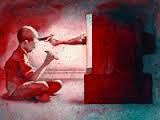 There are two categories in the Cultivation theory; "heavy viewers" and "light viewers". "Heavy viewers" are people that watch television for 4 hours or more per day and "light viewers" are people who watch television for 4 hours or less per day. "Heavy viewers" can be affected by the Mean World Syndrome, this means that because they've watched so much television they are led to believe that the world is nastier than it actually is. For example, if a person watches too much violence on TV, they can be influenced by it and believe that that amount of violence is acceptable in the real world.
The Hypodermic Needle Theory
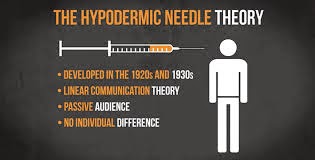 The Hypodermic Needle theory (also known as the Hypodermic Syringe Theory) suggests that viewers absorb information from the media without attempting to process or give the information context and it has a immediate and powerful impact on them, without their consent or knowing it.
Uses and Gratification Theory
This theory states that each individual viewer will use media texts for different reasons. Here are some example reasons:
There are two categories in the Cultivation theory; "heavy viewers" and "light viewers". "Heavy viewers" are people that watch television for 4 hours or more per day and "light viewers" are people who watch television for 4 hours or less per day. "Heavy viewers" can be affected by the Mean World Syndrome, this means that because they've watched so much television they are led to believe that the world is nastier than it actually is. For example, if a person watches too much violence on TV, they can be influenced by it and believe that that amount of violence is acceptable in the real world. The Hypodermic Needle Theory
The Hypodermic Needle theory (also known as the Hypodermic Syringe Theory) suggests that viewers absorb information from the media without attempting to process or give the information context and it has a immediate and powerful impact on them, without their consent or knowing it.Uses and Gratification Theory
This theory states that each individual viewer will use media texts for different reasons. Here are some example reasons:
- Personal Identity- A person who uses the media as a way to identify with someone else or a character.
- Surveillance - Documentaries and News programmes are most common in this type of usage. Surveillance relates to the idea of using the media to receive information.
- Diversion- This is the idea that a person will regularly use a media text to escape reality, most commonly through the use of soap operas as an audience can momentarily forget about their own issues and lose themselves in the characters' stresses.
- Entertainment - This is the most widely used connection with media. Many people use media texts as a way of entertaining themselves whilst relaxing. This is the reason behind why shows such as: The X Factor, I'm A Celebrity... Get Me Out Of Here and The Chase have such large viewing rates.
- Personal Relationships - Using media texts for social interaction and to enjoy a specific area of the media with others. Many people enjoy to watch programs with others so they can discuss them with others. This is common with programs like Big Brother or The X Factor.
For our thriller opener we want most people to view it for Entertainment. We don not want people to be able to identify with the characters as we plan for the film to be very dark and the main protagonist has had a very traumatic life.
Sunday, 9 November 2014
Conventions of a Thriller
What is a Thriller?
A thriller usually consists of a conflict between the protagonist and the antagonist, where the protagonist has to stop the antagonist from doing something that would threaten the safety of others. the antagonist's motives are usually to ruin or disrupt the protagonist's intentions. In a typical thriller there is usually a happy ending where the protagonist conquers his enemy and everyone lives.
Some of the conventions used when creating a thriller film:
camera angles/shots
lighting
black and white shots
non-diegetic music to create tension
It is common for the storyline of thrillers to be realistic, as if they could actually come true. This is because it hooks the audience and makes them want to watch it.
In regard to the characters within a thriller, stereotypically there is a male playing the role of the protagonist. He is very brave and courageous, it is his job to restore justice. The antagonist's identity is very usually anonymous until towards the end of the film. This draws the audience in and makes them want to watch more to see what happens. The antagonist is usually out to seek revenge on events that have happened in the past.
A thriller usually consists of a conflict between the protagonist and the antagonist, where the protagonist has to stop the antagonist from doing something that would threaten the safety of others. the antagonist's motives are usually to ruin or disrupt the protagonist's intentions. In a typical thriller there is usually a happy ending where the protagonist conquers his enemy and everyone lives.
Some of the conventions used when creating a thriller film:
camera angles/shots
lighting
black and white shots
non-diegetic music to create tension
It is common for the storyline of thrillers to be realistic, as if they could actually come true. This is because it hooks the audience and makes them want to watch it.
In regard to the characters within a thriller, stereotypically there is a male playing the role of the protagonist. He is very brave and courageous, it is his job to restore justice. The antagonist's identity is very usually anonymous until towards the end of the film. This draws the audience in and makes them want to watch more to see what happens. The antagonist is usually out to seek revenge on events that have happened in the past.
The camera shots in a thriller are very stereotypical. They use a lot of close up and extreme close up shots to show the emotions of both the protagonist and the antagonist. Furthermore close up shots can also encourage the narrative of the story. Shots of the antagonist are short, over the shoulder, or just a shadow. This is to protect their identity and provoke a sense of mystery.
Having the right music is vital when creating a thriller, because it helps the audience understand the mood of a scene, it can build up the climax and also add suspense.
Mise-en-scene is a very important aspect of a thriller film because it helps to set the scene and create a mood. It is vital to have the correct type of location so the audience can establish the genre, it uses dim lighting and the make-up and hair styles have to show what kind of people they are and their background. Thrillers are famous for using black and white or grainy effects for their movies and they also use costumes to distinguish between the protagonist and the antagonist characters.
Barthes Narrative Codes
Roland Barthes invented 5 narrative codes:
Action Code
The audience will recognise an action code in a media text as it is used to indicate what is the next logical step. It advances the narrative e.g. the buckling of a gun belt in a western film signifies the start of a gun fight.
mystery code or enigma code:
This is where the audience is meant to think that if they carry on watching they will find out the answer to something. For example seeing a blood splattered suitcase being loaded into a car and then at the end finding out who was in it.
The semic code
Semic codes are signs and meanings in a text or program that are used to tell us about its narrative and characters. e.g. in a horror movie the supernatural would be signified by garlic or a cross.
The cultural code
This code is used in order for the narrative to make sense to a culturally and socially aware audience. it makes reference to elements from the real world that the audience will recognise. e.g. trainers and tracksuits in a soap opera.
code of opposites
This code refers to a narrative that relies on binary opposites e.g. black v white, hot v cold, male v female, nature v civilisation.
Our Preliminary Task
In our preliminary task we used Code of Opposite because I was wearing a pink blouse whereas Charlotte was wearing a dark blue jumper showing the contrast from bad to good.
(picture to be inserted)
we also used Action Code when I walked up to the door showing she would be going through which in the next shot I did.
(picture to be inserted)
Cultural code, the weather was cloudy showing the typical weather in England, we are white and spoke in a British accent, showing our ethnicity. We wore stereotypical western clothes, hinting we were English.
(picture to be inserted)
Action Code
The audience will recognise an action code in a media text as it is used to indicate what is the next logical step. It advances the narrative e.g. the buckling of a gun belt in a western film signifies the start of a gun fight.
mystery code or enigma code:
This is where the audience is meant to think that if they carry on watching they will find out the answer to something. For example seeing a blood splattered suitcase being loaded into a car and then at the end finding out who was in it.
The semic code
Semic codes are signs and meanings in a text or program that are used to tell us about its narrative and characters. e.g. in a horror movie the supernatural would be signified by garlic or a cross.
The cultural code
This code is used in order for the narrative to make sense to a culturally and socially aware audience. it makes reference to elements from the real world that the audience will recognise. e.g. trainers and tracksuits in a soap opera.
code of opposites
This code refers to a narrative that relies on binary opposites e.g. black v white, hot v cold, male v female, nature v civilisation.
Our Preliminary Task
In our preliminary task we used Code of Opposite because I was wearing a pink blouse whereas Charlotte was wearing a dark blue jumper showing the contrast from bad to good.
(picture to be inserted)
we also used Action Code when I walked up to the door showing she would be going through which in the next shot I did.
(picture to be inserted)
Cultural code, the weather was cloudy showing the typical weather in England, we are white and spoke in a British accent, showing our ethnicity. We wore stereotypical western clothes, hinting we were English.
(picture to be inserted)
Subscribe to:
Posts (Atom)